Solar Basics
The answers you’re looking for
Thinking about solar but drowning in conflicting advice? Here are clear, honest answers to the questions homeowners ask most, from the people whose technology the solar industry already trusts.
Compare estimates from local installers
13
years in solar technology
7,000+
Solar companies use Aurora
20M+
Solar projects designed
90%
of top U.S. installers use Aurora
Solar basics, cost & savings
The questions almost everyone starts with.
How much do solar panels cost?
There is no single price. What you pay depends on your home, how much energy you use, and the equipment you choose. As rough national context, many systems fall between $15,000 and $30,000 before incentives, but that is only a reference point.
The more useful number is your own. On Aurora Marketplace you get an estimate modeled to your actual roof and your electric bill, built from real pricing supplied by local installers, so you see a figure made for your home instead of an average.
Are solar panels worth it?
For many homeowners, yes. If you own your home, get decent sun, and pay a meaningful electric bill, solar can lower what you pay for power for years.
Whether it is worth it for you depends on your roof, your utility rates, and how you pay for the system. The Marketplace estimates your monthly savings, your payback period, and your projected 25-year savings from your own bill and roof, so you can judge the value with real numbers rather than a national average.
How much will I save, and will solar eliminate my electric bill?
Your savings depend on how much energy you use, your local utility rate, and your net metering rules. Many homeowners offset most of their electricity, but a small fixed connection charge usually remains, so a true $0 bill is possible but not guaranteed.
Because your estimate is modeled from your actual monthly bill and your utility, it shows your projected monthly and 25-year savings rather than a generic promise.
Rising energy bills? Why 2026 is the year to go solarWhat is the payback period on solar?
Payback is the point where your savings have covered the cost of the system. For a cash purchase it commonly lands somewhere around 7 to 12 years, after which the electricity your panels make is essentially free for the rest of their life, often 25 years or more.
Your Marketplace estimate calculates the payback period for your specific system and bill, so you do not have to guess.
How many solar panels do I need?
It depends on how much electricity you use and how much usable sunlight your roof gets. Rather than a rule of thumb, the Marketplace models your specific roof from satellite imagery, its size, orientation, and shading, then sizes a system to your energy use.
You can also adjust the panel count yourself on each offer and watch the price update live, so you can see how a bigger or smaller system changes your numbers.
Is my house a good candidate for solar?Do solar panels work at night or on cloudy days?
Panels turn sunlight into electricity your home uses in real time. They still produce on cloudy days, just less, and they do not produce at night.
That is what net metering and batteries are for. They cover you when the sun is not shining, using the credit or stored power you banked earlier.
Do solar panels work on cloudy days or at night?
Estimates built for your specific home, not a general zip code.
Every estimate is modeled from your actual roof and electric bill, then priced by real local installers. Compare them on your own timeline, and only connect when you are ready.
See estimates for your homeIncentives & the federal tax credit
One of the most-searched, and most-changed, topics in solar right now.
Is the federal solar tax credit still available in 2026?
The 30% federal tax credit for homeowners who buy their own system (the Residential Clean Energy Credit, Section 25D) ended on December 31, 2025. If you purchase a system now with cash or a loan, you cannot claim that federal credit anymore.
Although, you may still qualify for state, local, and utility incentives. While homeowners can't directly receive the federal tax credit anymore, installers are still eligible for certain business tax credits. Those savings often pass-through to you when you purchase solar through a lease or PPA payment option. Any incentives that apply to you are already reflected in the net cost and savings on your Aurora estimate. Because tax rules change and depend on your situation, it's always good to confirm what applies to you with one of our energy advocates.
Did the solar tax credit expire in 2026? Here's what homeowners need to knowDo I still get the tax credit if I lease or sign a PPA?
With a lease or power purchase agreement (PPA), the company that owns the system, not you, claims the available business tax credit, and typically factors those savings into the rate you pay.
You do not file for the credit yourself, so compare the total cost over the life of the agreement, not just the monthly payment. The Marketplace prices cash, loan, and PPA or lease for the same system side by side, which makes that comparison straightforward.
Are "free solar panels" really free?What rebates and incentives are available in my state?
Beyond federal policy, many states, utilities, and cities offer their own rebates, performance payments, and property or sales-tax exemptions, and they vary a lot by location.
Applicable incentives are factored into the net figures on your estimate, so the savings you see already reflect them.
A guide to solar rebates and incentivesHEEHRA home energy rebate explainedPaying for solar
Cash, loan, lease, PPA, or prepaid PPA. The choice that most affects your savings.
Should I buy or lease solar panels?
Buying with cash or a loan means you own the system and keep the long-term savings and any added home value. Leasing or a PPA means little to no money upfront, but the provider owns the panels and you pay for the power or equipment over time.
As a rule of thumb, ownership saves more over the life of the system, while third-party options lower the upfront hurdle and maintenance costs. On the Marketplace, cash, loan, and PPA or lease are all priced for the same system at once, so you can switch between them and compare like for like.
What is the difference between a solar lease and a PPA?
With a lease, you pay a fixed monthly amount to use the system. With a PPA, you pay per kilowatt-hour for the power it actually produces. In both, a third party owns the panels and handles maintenance. Some providers also offer a prepaid PPA, where you pay for the power up front instead of monthly.
For a PPA or lease, your estimate shows the monthly payment and any annual escalator, so you can see how the cost changes over time.
What's the difference between a solar PPA and a solar lease?What is a prepaid PPA, and how is it different from a regular PPA?
With a regular PPA, you pay for your system's power month by month, usually at a rate that can step up a little each year. With a prepaid PPA, you pay for that power once, up front, typically at a discount, and then have no monthly solar payment at all.
In both cases the provider still owns the system and handles maintenance, so you get the worry-free side of a PPA with something closer to the economics of buying. Prepaid options are priced on your estimate where available, so you can compare them against cash, loan, and monthly PPA or lease for the same system.
What is a prepaid solar lease?Can I get solar with $0 down, and what is the catch with "free" solar?
$0-down loans, leases, and PPAs are real and common. But "free" usually means you do not own the system and you are paying over time through your loan payment or power rate.
Read the terms, look at the total cost over 20 to 25 years, and compare against buying. Because the Marketplace prices every payment option for the same system, you can see the full cost of "free" next to ownership before you decide.
The truth about "free solar"What happens to my loan or lease if I sell the house?
Loans are typically paid off at closing, often from the sale proceeds, or transferred to the buyer. Leases and PPAs are usually transferred to the buyer or bought out before the sale. A prepaid PPA transfers too, and it can be an easy sell since the power is already paid for.
Planning to move soon? Factor that in before you sign.
Selling a house with solar panelsBatteries & backup power
The part that surprises most homeowners.
Do solar panels work during a power outage?
On their own, no. For safety, a standard grid-tied system shuts off during an outage so it cannot send power into lines that utility crews may be working on.
To keep your lights on when the grid goes down, you need a battery, or a compatible backup setup, that can safely run your home while disconnected from the grid.
Do I need a battery with my solar panels?
Not necessarily. A battery is worth considering if you have frequent outages, your utility pays little for the power you export, or you simply want backup power. Otherwise, the grid effectively acts as your storage through net metering.
On the Marketplace you can add battery storage to any offer and see it priced on its own, with its own financing, so it is easy to compare solar with and without a battery.
Solar batteries: how they work, cost, and whether you need oneHow long will a solar battery power my house?
It depends on the battery's size and what you are running. Many homeowners size a battery to cover essentials like the fridge, lights, internet, and a few outlets for a day or more, rather than powering the whole house at once.
Solar energy storage: everything you need to knowAre solar batteries worth the cost?
Batteries add resilience and let you use more of your own solar power, but they also add cost. The value depends on how often your power goes out, what your utility pays for exported energy, and how much backup matters to you. Adding a battery to your estimate lets you see the extra cost and payment before you decide.
Net metering & your bill
How the grid credits the power you do not use.
Can I sell solar power back to the grid?
In many areas, yes. Through net metering or net billing, the extra power your system sends to the grid earns you credits on your bill. How much each credit is worth depends on your state and utility.
Because your estimate reflects your actual utility rate environment, the savings it shows already account for how your utility credits exported power.
What you need to know about net meteringHow does net metering work?
When your panels make more power than you are using, the surplus flows to the grid and you are billed for the net, meaning your total usage minus what you sent back. Rules and credit values vary by utility, and some areas have shifted to lower net billing rates.
What is a true-up?
A true-up is the periodic settlement, often once a year, where your utility tallies the credits you earned against the power you pulled from the grid, then bills or credits you for the difference.
Going solar, step by step
From choosing an installer to the day your system turns on, here’s every step: who does what, how long it takes, and what you’ll decide along the way.
See the full process
Installation & what to expect
From choosing an installer to switch-on.
How long does it take to install solar panels?
The physical installation is often just a day or two. The full timeline from signing to switch-on is usually longer, commonly one to three months, because of design, permitting, and your utility's approval to operate.
Once you connect with an installer through the Marketplace, they become your source for the exact timeline in your area.
What is the process of getting solar installed, step by step?
Generally it goes like this: you compare estimates and choose an installer, the installer performs a detailed site assessment and confirms the design, then comes permitting, installation, an inspection, and finally permission to operate (PTO) from your utility before you turn the system on.
What is permission to operate (PTO)?
PTO is your utility's formal sign-off that your system is safe and approved to connect to the grid. In most places you cannot switch your system on until you have it, and it is a common reason installs feel like they are taking a while at the end.
Do I need a permit or HOA approval?
Most installations require local permits, and your installer usually handles them for you. If you are in an HOA, check its rules early, though many states limit an HOA's ability to block solar outright.
Maintenance, warranties & reliability
What owning solar actually asks of you.
Do solar panels need maintenance?
Very little. Panels have no moving parts, rain handles most of the cleaning, and the main things to keep an eye on are overall performance and the inverter over time.
What you need to know about solar panel maintenanceHow long do solar panels last?
Most panels are built to last 25 to 30 years or more, and typically come with a performance warranty guaranteeing a minimum output for around 25 years. They slowly lose a little efficiency each year rather than failing all at once.
How long do solar panels last?What warranties come with solar?
Solar systems usually carry several: a product or equipment warranty, a performance warranty for guaranteed output over time, and a workmanship warranty from your installer. Terms vary, so ask each installer you compare.
What happens if a panel stops working?
Warranties typically cover defective equipment, and a reputable installer or the manufacturer handles the repair or replacement. It is one more reason it helps to choose an established, well-reviewed installer, which you can weigh on each Marketplace offer.
Selling a home with solar
What happens to your panels when you move.
Do solar panels increase home value?
Owned solar is generally viewed as an asset and can add to a home's value, since it lowers the next owner's energy costs. Leased systems are more nuanced, because the agreement has to transfer to the buyer.
Do solar panels increase your home value?Can I sell my house with solar panels?
Yes. If you own the system, it usually stays with the home and becomes a selling point. If you lease or have a PPA, you will transfer the agreement to the buyer or buy it out. Planning ahead makes the sale smoother.
Selling a house with solar panelsAurora & how the Marketplace works
Who is behind these answers, and how your estimates are made.
Who is Aurora Solar?
Aurora Solar is a solar technology company founded in 2013. Our software is used by more than 7,000 solar organizations, including 90% of the top U.S. residential solar companies, and more than 20 million solar projects have been designed on our platform.
In other words, the technology the solar industry already relies on to design and price systems now helps homeowners shop for solar with the same confidence.
What is the Aurora Marketplace?
It is a free way to get personalized solar estimates and compare local installers on your own timeline. You enter your address, your monthly electric bill, and your utility, and the Marketplace generates estimates from multiple independent installers so you can compare real options side by side. No account or contact information is required to see them.
The Marketplace also gives you the knowledge to make confident decisions at any stage of your journey, and connects you with other energy solutions that match where you are in your goals at the time, whether that is a battery add-on for a new system or maintenance and repairs for a system you already own.
How does the Marketplace calculate my estimate?
Each estimate is modeled to your specific home, not a regional average. Your roof is analyzed from satellite imagery for its size, orientation, and shading to project how much energy a system would produce, and that is combined with your monthly bill and your utility rate.
The dollar figures come from installer pricing local to you, applied to your modeled system, which is why two houses on the same street can see different estimates.
How accurate are the estimates?
They are well-grounded modeled projections meant for comparison, not binding quotes. Where there is uncertainty, key figures are shown as low and high ranges rather than a single false-precision number, and applicable incentives are already reflected in the net cost and savings.
The installer you choose confirms the final design and price after an in-person site assessment, which checks things aerial imagery cannot, like roof condition and electrical panel capacity. A confirmed proposal may differ modestly from the estimate. A large difference is uncommon and worth questioning unless you and your installer have chosen to significantly change the system design.
Can I compare financing options and customize the system?
Yes. Cash, loan, and PPA or lease, plus prepaid arrangements where available, are all priced for the same system at once, so you can toggle between them and compare like for like. For each option your estimate shows the relevant details, such as monthly payment, estimated monthly and 25-year savings, and payback period for a cash purchase.
You can also raise or lower the panel count and add battery storage on each offer, with the price updating live. These are adjustments to the estimate; the installer confirms the final design after a site visit.
Is it really free, and will I get flooded with sales calls?
The Marketplace is free to use, and your estimates are generated anonymously. You can compare full estimates without creating an account or sharing your phone or email.
Your contact details are shared only with the specific installer you choose to connect with, not with everyone on the page, and only at the moment you decide to reach out.
What happens after I connect with an installer?
When you're ready, contact an installer and share your name, phone, and email. You'll confirm your information with a one-time passcode by text or email, so your details reach the right installer and no one else.
Next, we'll call you. We'll talk through your system design, answer your questions, and set your installer up to give you a real number, not an estimate.
You don't have to stop at one installer. Line up a few and compare offers side by side. We recommend it.
Can I talk to a real person if I need help?
Yes. Aurora Marketplace support can help you interpret your estimates and navigate the process, by phone Monday through Friday from 9:00 AM to 5:00 PM Mountain Time, by live chat, or by text. That support comes from the Marketplace, not the installer.
Choosing a trustworthy installer
How to protect yourself and get a fair deal.
How do I choose a solar company?
Compare more than price. Look at reviews and reputation, warranty terms, the equipment offered, and how clearly a company answers your questions. On the Marketplace, each installer's rating, BBB accreditation, and years in business sit right on their offer, so you can weigh them next to the numbers.
Getting multiple quotes is the single best way to protect yourself and to negotiate.
How do I avoid solar scams?
Watch for high-pressure sales, "free solar" claims that quietly hide a lease, promises of a specific tax benefit without anyone knowing your taxes, and quotes you cannot easily compare. Get everything in writing and compare at least a few offers.
Comparing like-for-like estimates side by side, as the Marketplace is built to do, makes a bad offer easier to spot.
Common solar scams to avoidHow many quotes should I get?
That's up to you but we recommend more than one. Comparing quotes side by side is the clearest way to spot a fair price and a trustworthy installer, and the Marketplace lets you connect with several installers from one place to get competing offers.
Recognized across the industry
Trusted by the people who build solar for a living
You may be meeting Aurora for the first time, but the solar industry has trusted our technology for over a decade. The same standard the pros rely on is the one we bring to helping you shop with confidence.

Named to the Forbes AI 50, recognized as the only climate-tech company on the list the year it appeared.

Named best solar software by Solar Power World, an authority the industry reads.
Performance and shade modeling independently validated by the U.S. National Renewable Energy Laboratory.

The first assessment tool approved by the California Energy Commission for building-code compliance.
As seen in





Ready to see what solar looks like for your home?
Get free, personalized estimates and compare local installers, starting with just your address. No cost, no account, and no sales calls until you choose to connect.
This page is for general education, not financial, tax, or legal advice. Estimates shown on Aurora Marketplace are modeled projections based on installer-supplied pricing applied to your property and energy profile; they are not binding quotes, and final design and pricing are confirmed by your chosen installer after a site assessment. Solar costs, savings, incentives, tax rules, and utility policies change over time and vary by location and situation. Confirm the details that apply to you before making a decision.
From the blog
Guides and tips to help you go solar with confidence.
Uncategorized
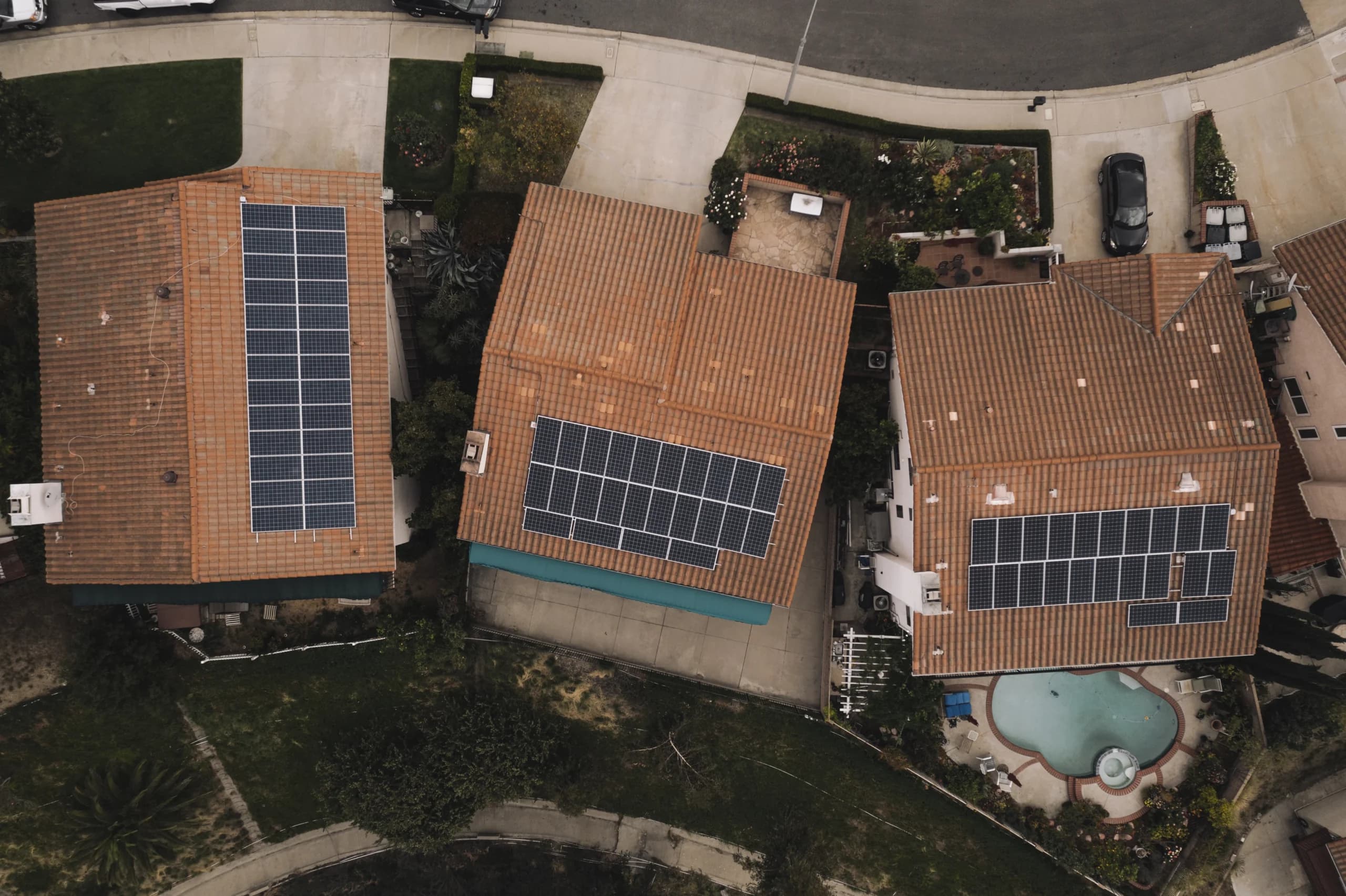
9 Solar Truths Most Homeowners Learn Too Late
A guide that answers the nine most common concerns homeowners have when considering installing solar panels on their home.