How big are solar panels?
Find out the average dimensions of residential solar panels and the different types available
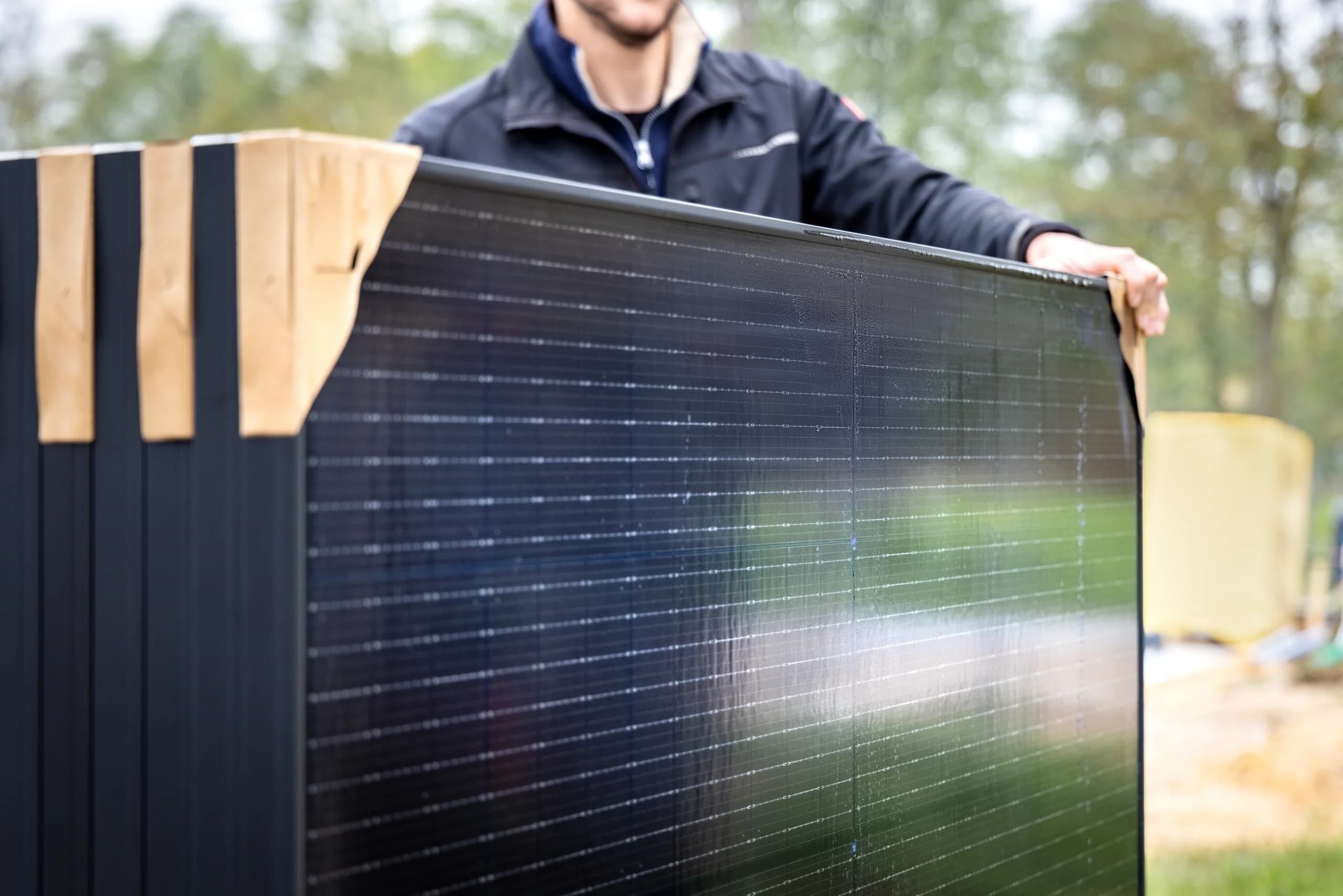
A standard residential solar panel measures about 65 inches by 39 inches (5.4 ft x 3.25 ft) and weighs 39 to 42 pounds, but exact solar panel dimensions vary by manufacturer, cell count, and whether it’s built for a home or a commercial roof. Here’s how size, weight, and wattage break down by panel type, and what it means for how many panels your roof can fit.
Figuring out how solar panels will fit on your roof and how many you need are common questions when considering a solar energy system. While your specific energy needs and your home’s characteristics play a big role in the overall system design, understanding the building blocks — the solar panels themselves — is a crucial starting point.
This guide will walk you through the typical dimensions and common types of residential solar panels, focusing on their standard physical characteristics.
In this article:
- Standard residential solar panel dimensions
- A note on residential vs. commercial solar panel sizes
- Factors influencing solar panel dimensions
- Types of solar panels
- How to choose the right solar panel size for your needs
Want to see what solar panels look like on your roof? Get a free estimate with just your ZIP code.
Standard residential solar panel dimensions
Solar panels are often discussed in two size variations: the number of cells and the physical size in inches/feet. There aren’t many panel sizes to consider, but knowing the differences between them is important as you prepare your home for installation.
Number of cells
Solar panels are built from individual photovoltaic cells. A typical panel contains 60-96 six‑inch‑square cells, and each cell can generate roughly 4-5 watts of electricity under peak sunlight. For residential installations, the most common format is the 60‑cell panel arranged in a 6 × 10 grid.
Physical size
The physical size of a solar panel is typically described as its length and width. Standard 60-cell solar panels are approximately 65 in x 39 in (5.4 ft x 3.25 ft, or 17.55 sq ft). Newer or higher wattage panels may have slightly different dimensions.
Solar panel specifications by type
| Type | Cell count | Dimensions | Weight | Typical wattage | Efficiency |
|---|---|---|---|---|---|
| Residential (standard) | 60-cell | 65″ x 39″ x 1.4″ | 39-42 lbs | 350-400W | 16%-24% |
| Residential (high-efficiency) | 66-cell | 68″ x 41″ x 1.4″ | 42-46 lbs | 400-450W | 20%-24% |
| Commercial | 72-cell | 78″ x 39″ x 1″ | 55-62 lbs | 400-550W+ | 17%-22% |
How much do solar panels weigh?
A standard 60-cell residential solar panel weighs about 39 to 42 pounds — roughly 2.2 to 2.3 pounds per square foot. That’s based on published specs from major manufacturers: REC’s TwinPeak series comes in at 39.5 lbs, and Panasonic’s N330 panel weighs 41.9 lbs. Larger 72-cell panels, more common in commercial installs, weigh more — Trina Solar’s 72-cell Duomax module weighs 61.7 lbs, or about 2.9 lbs per square foot.
That weight matters for one reason: your roof has to be able to hold it. A full residential array — usually 20 to 25 panels — adds roughly 2 to 3 pounds per square foot of roof space once mounting hardware is included. Most roofs built to modern code handle this without any reinforcement, but it’s worth flagging if your home has an older roof, a slate or tile roof, or any known structural concerns. A vetted installer will run a structural assessment before your install to confirm your roof can carry the load — it’s a standard part of the process, not a red flag.
Panel weight by type
| Panel type | Cell count | Example model | Weight | Weight per sq ft |
|---|---|---|---|---|
| Residential (standard) | 60-cell | REC TwinPeak | 39.5 lbs | ~2.2 lbs |
| Residential (standard) | 60-cell | Panasonic N330 | 41.9 lbs | ~2.3 lbs |
| Commercial | 72-cell | Trina Solar Duomax | 61.7 lbs | ~2.9 lbs |
Sourced from manufacturer datasheets (REC, Panasonic, Trina Solar).
Need a little break? Play Solar Surge!
Solar panel wattage by size
A panel’s physical size and its wattage go hand in hand — more cells means more surface area to generate power, so bigger panels generally produce more electricity. Most residential 60-cell panels are rated between 350 and 400 watts, while newer high-efficiency 66-cell residential panels can reach 400 to 450 watts in roughly the same footprint. Commercial 72-cell panels typically produce 400 to 550+ watts.
This is why panel count and wattage matter together when you’re picturing your own system: a 7 kW home system might need around 18 panels at 400W each, or as few as 15 panels if you choose a higher-wattage model — which can matter if your usable roof space is limited. An installer sizing your system will balance panel wattage, roof space, and your home’s energy usage to land on the right combination.
How much roof space do solar panels need?
A single 60-cell panel takes up about 17.5 to 18 square feet, so a typical residential system of 20 to 25 panels needs roughly 350 to 450 square feet of usable roof space — usually less than half of an average home’s total roof area, since not every section faces the right direction or stays shade-free.
“Usable” is the key word. Installers subtract space for vents, chimneys, skylights, and setback requirements from local fire codes, so the roof square footage that matters is smaller than what you’d measure from the ground. This is also where panel size becomes a practical decision rather than a spec-sheet one: if your roof has limited usable space, higher-wattage panels (see above) let you fit a smaller system that still meets your energy needs. If you’re not sure how many panels your specific roof can fit, that’s exactly what a solar design consultation is for — an installer can map your actual roof against panel size and shading to give you a real number.
A note on residential vs. commercial solar panel sizes
As a homeowner, you may see some solar panels on the market that are meant for commercial use. These are typically larger-format panels on ground mounts. The biggest differences between commercial and residential solar panels are their size and functionality. Commercial solar panels are typically 78 in x 39 in (6.5 ft x 3.25 ft) and have 72 cells. They’re built to generate more electricity due to their size and are more cost-efficient since they don’t have to be as aesthetically pleasing.
Factors influencing solar panel dimensions
There is a range of factors that impact the dimensions of solar panels. They have come a long way since the first solar homes in the 1970s. Whether the panels are larger to increase their output or lighter because of their composition, they are all factors you should consider before a purchase.
- Manufacturers and technological diversity: Different solar manufacturers and technologies lead to variations in panel size.
- Evolution of solar panel technology: Technological advancements over time have contributed to changes in panel dimensions.
- Market demand and energy production needs: The demand for higher-output panels impacts their size and design — this is why commercial panels are larger than residential ones.
Types of solar panels
There are currently four main types of solar panels on the market: monocrystalline, polycrystalline, thin-film, and PERC. Let’s break down their unique pros and cons, including information about the materials they’re made from.
Monocrystalline solar panels
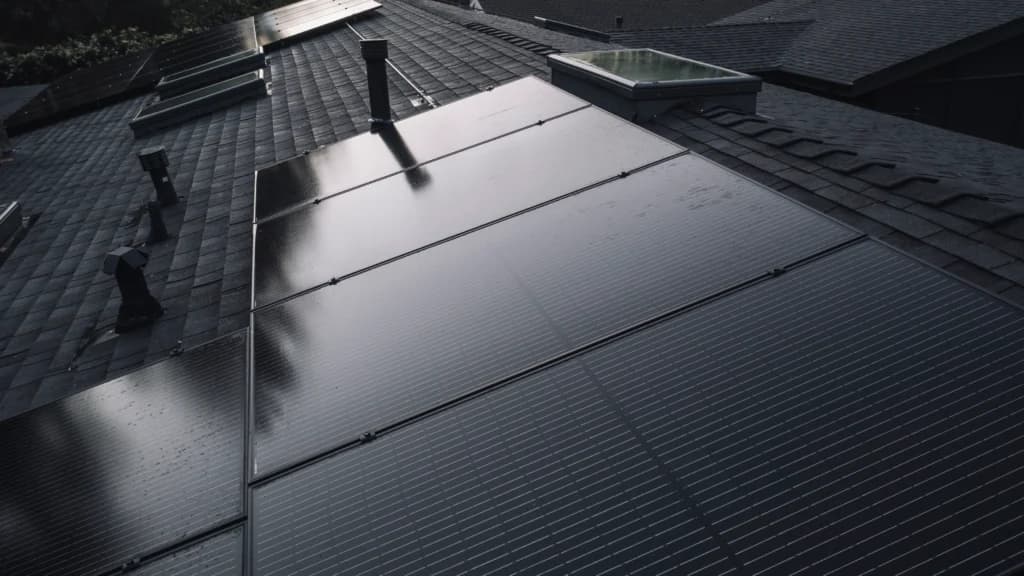
Monocrystalline solar panels are the most common type of solar panels used today, a popularity driven by their sleek design and high efficiency. In this context, solar panel efficiency refers to the percentage of sunlight hitting the panel that is converted into usable electricity. Their cells are made from a single, pure silicon crystal, which results in their signature all-black appearance with rounded corners.
The uniform crystal structure of monocrystalline panels makes them highly efficient, with modern panels featuring efficiency ratings that can range from 16%-24%. This high performance generally corresponds to a higher upfront cost; monocrystalline panels cost approximately $1-$1.50 per watt (before installation), while polycrystalline panels are a bit cheaper at $0.90-$1 per watt.
Most crystalline solar panels are durable, with a lifespan of 25+ years, and most manufacturers offer 25-30-year power warranties. While all solar panels experience a gradual decline in energy output over time (a process known as degradation), monocrystalline technology often holds a performance advantage. The degradation rate is approximately 0.5% per year for monocrystalline panels, compared to 0.6% per year for polycrystalline.
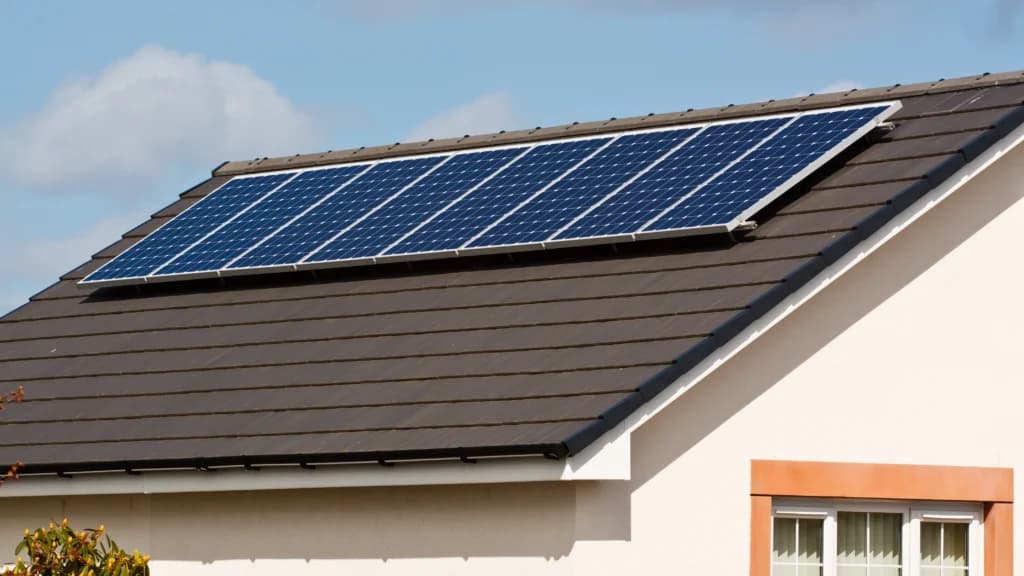
Polycrystalline solar panels
Polycrystalline solar panels, also called multi-crystalline, are a common alternative to monocrystalline panels. They’re made by melting multiple silicon fragments together, a process that creates their signature blue, speckled appearance with perfectly square-shaped cells.
This simpler manufacturing process results in a lower upfront cost but comes with a trade-off in performance. Polycrystalline panels are generally less efficient than their monocrystalline counterparts, with most landing between 13%-16% efficiency. They also tend to degrade at a slightly faster rate over their lifespan. Because of this, polycrystalline panels can require more roof space to produce the same amount of power and are now more often seen in older residential systems or large‑scale installations where space is less constrained.
Thin-film solar panels
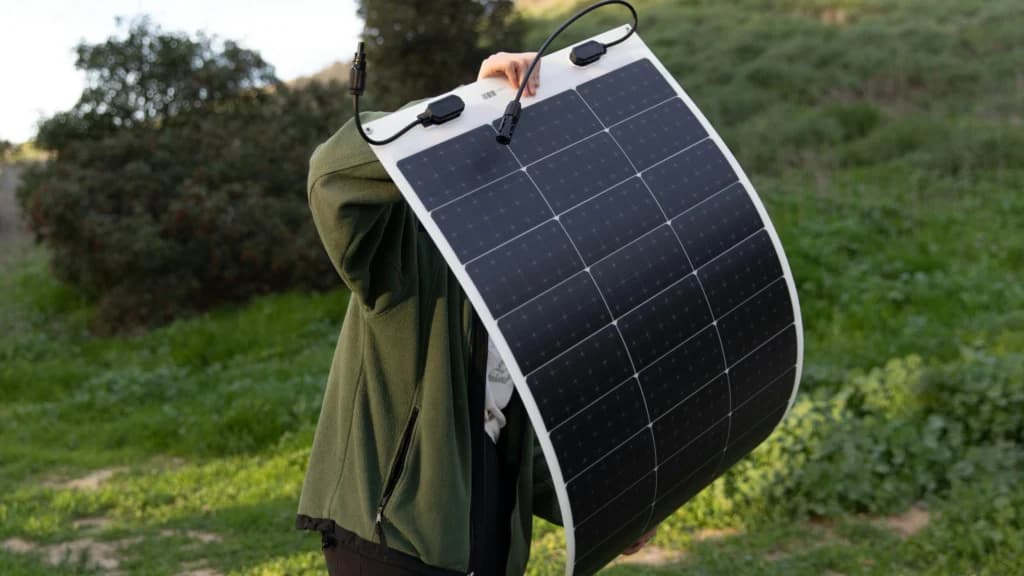
Thin-film solar panels are a different kind of solar technology compared to the more common crystalline silicon panels. Their main advantage comes from how they’re made: they’re lightweight, flexible, and can be manufactured with less material waste.
However, that lighter design comes with some trade-offs. Thin-film panels are less efficient, typically converting about 6%-15% of sunlight into electricity. They also don’t last as long as traditional panels. Because of their lower efficiency, they need a lot more surface area to produce the same amount of energy. That’s why you’ll mostly see them used in building-integrated photovoltaics, commercial, and utility-scale projects where space isn’t a major concern, rather than on residential rooftops.
Passivated Emitter and Rear Cell (PERC) solar panels
PERC solar panels, short for Passivated Emitter and Rear Cell, are an enhanced version of traditional crystalline silicon panels. What sets them apart is a special reflective layer added to the back of each solar cell. This layer bounces some of the sunlight that would normally escape back into the cell, giving it another shot at being converted into energy. Many PERC panels also include coatings that help reduce energy loss, making them more efficient overall.
That added efficiency makes a real difference. Studies have shown that PERC technology can boost energy conversion by more than 1% compared to standard crystalline panels. PERC panels also tend to perform better in low-light and high-temperature conditions, which can be helpful depending on your roof orientation or local climate.
Because of these benefits, PERC panels are gaining popularity among homeowners. They’re increasingly featured in newer residential solar systems thanks to their strong performance in a compact footprint.
Solar panel types: a comparison
| Solar panel type | Pros | Cons |
| Monocrystalline | • Sleek all‑black look that blends with many roofs • Proven, widely available technology • High efficiency (~16%-24%) • Durable with a long lifespan and slow degradation rate (~0.5 %) | • Higher upfront cost |
| Polycrystalline | • Lower upfront cost than monocrystalline panels • Proven, widely available technology | • Less efficient (~13%-16%) and require more roof space • Slightly faster degradation (~0.6 %) •Blue, speckled appearance may not suit all aesthetics |
| Thin-film | • Lightweight and often flexible • Less silicon material used in manufacturing | • Lowest efficiency (~6%-15%), requiring much more surface area • Shorter typical lifespan and warranties • Rarely used on residential rooftops |
| PERC | • Boosts the efficiency of crystalline panels • Performs better in low‑light & high‑temperature conditions • Produces more power per square foot, so you may need fewer panels | • Slightly higher cost than standard non-PERC panels |
How to choose the right solar panel size for your needs
Now that you understand the key differences in solar panel technology, the next step is determining the right system size and layout for your home. Factoring in your roof’s structure, your home’s energy needs, and your specific budget to create an optimal design is where professional expertise becomes essential. A qualified installer can analyze these variables to create a plan tailored to your needs.
Ready to see what that looks like for your home? With Aurora Solar, you can instantly compare quotes from multiple vetted solar installers, with upfront system‑size and pricing estimates, all in one place.
Frequently asked questions
Q: Do solar panels come in different sizes?
Yes — panel dimensions vary by cell count (60-cell, 66-cell, and 72-cell being the most common) and by manufacturer. Residential panels are generally smaller and lighter than the 72-cell panels used in commercial installations, though size alone doesn’t determine performance — a smaller high-efficiency panel can outproduce a larger standard one.
Q: What’s a typical home solar system size?
Most residential solar systems are sized between 6 and 10 kW, which usually works out to 15-25 panels depending on panel wattage and your household’s energy use. That’s a different question from panel size — one panel’s dimensions stay fixed, but how many you need depends on your roof, your usage, and your goals.
Q: How much does a solar panel weigh per square foot?
Roughly 2.2 to 2.9 pounds per square foot, depending on panel type — residential panels run lighter (about 2.2-2.3 lbs/sq ft) than commercial panels (about 2.9 lbs/sq ft). A full residential array typically adds 2-3 lbs per square foot to your roof once mounting hardware is included, well within what most modern roofs are built to support.