Tesla Solar Roof is discontinued. What does it mean for homeowners?
Tesla solar roof tiles have gone the way of the dodo as of August 2026 after nearly a decade of lackluster sales. If you were considering one, or just wondering what happened, here’s the story, and what to do instead.
When Elon Musk unveiled the Tesla Solar Roof in October 2016, it was one of the most dramatic product launches in clean energy history. Using the old set of Desperate Housewives, Musk promised a roof made of glass solar tiles that would be more durable than traditional roofing, generate clean electricity, and look so good you wouldn’t know it was solar.
Honestly, Solar Roofs look pretty great, but they never really caught on. Musk envisioned installing 1,000 Solar Roofs per week, but barely installed three times that over the almost a decade since.
By this summer, the product had quietly disappeared from Tesla’s website.
So, what happened? TL;DR: The technology was real, the look was clean, but the economics were more complicated. And the lesson Tesla itself seems to have drawn, it’s now pivoting back to conventional solar panels, tells you everything you need to know.
Get a no-pressure estimate for conventional solar + battery storage for your home.
In this article:
- What is/was the Tesla Solar Roof?
- What went wrong
- Tesla’s new direction
- It wasn’t just Tesla
- What if you were considering a solar roof
- Frequently asked questions
What is/was the Tesla Solar Roof?
In theory, it was really cool. Instead of mounting solar panels on your existing roof, you’d replace the roof itself with glass tiles that contained embedded solar cells. From street level, they looked like high-end slate or textured glass, not the rectangular panels most people picture when they think “solar.” (Editor’s note: Regular panels can look great when they’re done right!) Non-solar tiles of the same material would fill the rest of the roof, making the whole surface look seamless.
The pitch was aimed squarely at homeowners who wanted the benefits of solar but hated the look of conventional panels. (Editor’s note: Again, conventional panels can look slick!) Tesla argued this was a premium product worth a premium price, and that the combination of a new roof plus solar generation would be cheaper, over time, than buying a new roof and a conventional solar system separately.
At the time of the launch, Musk predicted Tesla would be installing 1,000 Solar Roofs per week by 2020. (Narrator: They did not install 1,000 Solar Roofs per week.)
What went wrong
Almost nothing about the Solar Roof went according to plan.
The cost was far higher than expected. Tesla initially priced the Solar Roof competitively. But, by the time the product reached actual customers, installation costs had risen to two to three times early estimates. This meant that some customers could be looking at $100,000 for a full roof replacement on a mid-sized home. Tough to say that “pays for itself.”
Installation could be tough. Conventional solar panels are mounted on an existing roof in a day or two. The Solar Roof? Not so much. To install a Solar Roof the installer first had to completely tear off the existing roof and replace the entire roof surface. Installers dealt with structural complications, inconsistent tile specifications, and a lack of experienced crews who could do the job right. Projects routinely took far longer than quoted.
The tiles could be unreliable. Individual tiles cracked under things like thermal stress and hail. Flashing and sealant failures caused leaks. And when tiles failed or underperformed, it could be difficult to get to the root of the problem.
You see, a traditional solar install may have something like 20 panels, making something like a hundred individual connection points. That seems like a lot, but when something goes wrong there’s a limited number of possibilities.
A Solar Roof, with all its tiles, can have thousands of connection points. Finding the problem tile among potentially hundreds of nearly identical-looking tiles distributed across a complex roof is a bit like troubleshooting a strand of old Christmas lights: You know something’s wrong, but identifying which bulb is out requires going tile by tile.
The numbers had trouble matching the promises. Real-world production often underperformed the estimates homeowners were quoted. Wood Mackenzie found that by 2022, the Solar Roof had captured just 0.03% of the roofing market and 0.17% of residential solar capacity installed that year, a fraction of the original vision.
Tesla’s solar direction
What’s telling is what Tesla is doing instead of the Solar Roof.
In January 2026, Tesla launched a new product at the same Buffalo, New York, factory where it once produced solar roof tiles: a conventional rooftop solar panel. It’s sleek, all-black, and designed to integrate with the Powerwall. But it is, in reality, a normal solar panel.
Tesla is also exploring a $10.1 billion solar cell manufacturing facility near Houston, Texas, positioning itself as a supplier to the broader U.S. solar market.
The message is clear: Tesla decided that the best move is to make the same form factor that has become the largest new power source in the world — conventional solar panels — and to make them well.
It wasn’t just Tesla
The Solar Roof’s struggles aren’t just about Tesla. Integrated solar shingles have had a hard time finding customers.
For now, many integrated solar roofing products are technically feasible but in many cases it can be tough to justify the added cost versus conventional panels, which have become dramatically cheaper and more efficient over time.
What if you were considering a Solar Roof?
If the Tesla Solar Roof was on your list, the answer is simple: It’s no longer available. There are integrated roof options, like GAF, that offer solar shingles.
The good news is that conventional solar panels have improved significantly since 2016, and as we’ve been saying, they really can look great. (Editor’s note: See?). All-black panels, low-profile mounting systems, and careful layout can give you a solar install that looks clean and intentional.
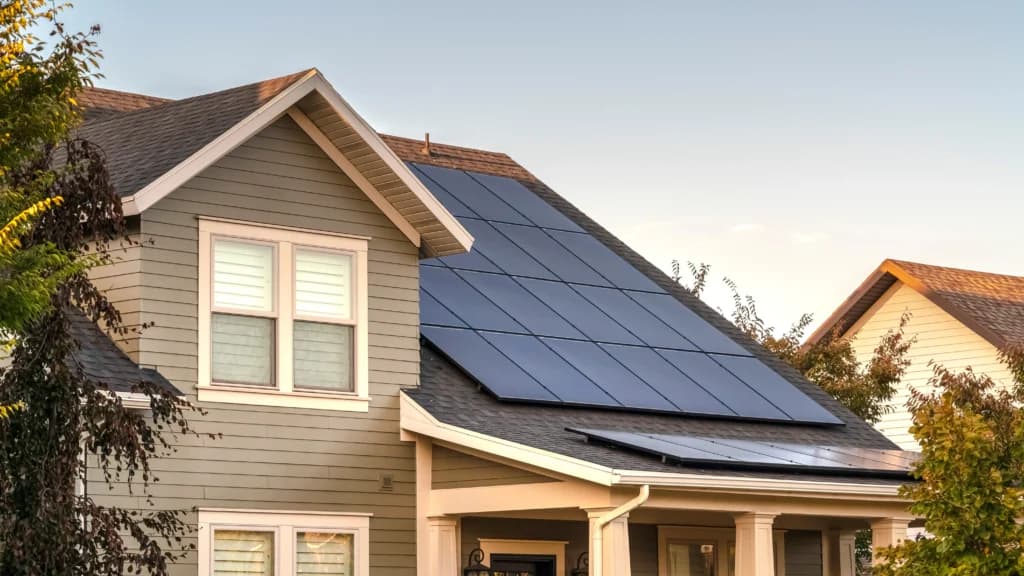
If you’re replacing a roof and want solar at the same time, that’s still a great opportunity, but you can just do a more conventional solar-plus-new-roof approach. And many solar installers offer both services.
A few silver linings:
Conventional panels are easier to service. If a panel underperforms or fails, it’s easy to identify (modern monitoring systems show individual panel output) and straightforward to replace. You’re not troubleshooting hundreds of embedded tiles across a full roof replacement.
The Powerwall is still available. Tesla’s battery storage product wasn’t the problem. The Powerwall 3 remains one of the most popular home batteries on the market, with strong specs and an integrated inverter that pairs well with any solar system. For more, see our full battery comparison guide.
Get a real estimate. Solar installers can give you a detailed proposal that includes specific equipment, real production estimates for your roof, a clear financial picture, and, yes, even a quote for a new roof, before you sign anything. For what a complete quote should include, see our solar quote checklist.
The bottom line
Positioning things positively, Tesla’s pivot back to standard panels could be seen as an endorsement of the solar panels that most homeowners have been installing all along. If you want solar on your roof, a great path forward looks a lot like it always has: conventional panels, a quality installer, and a battery if the economics work for your home.
See what solar actually looks like for your home, and get an estimate in minutes.
Frequently asked questions
Q: Is the Tesla Solar Roof discontinued?
Yes. As of August 2026, the Tesla Solar Roof is no longer listed among Tesla’s home energy products and is not available for new installations. Tesla has not made a formal public announcement, but trade publications including Electrek confirmed the discontinuation on August 20, 2026.
Q: What is Tesla doing instead of the Solar Roof?
Tesla launched a conventional rooftop solar panel in January 2026, manufactured at its Buffalo, New York, facility. It’s an all-black panel designed to integrate with the Powerwall battery. Tesla is also reportedly exploring a $10.1 billion solar cell manufacturing plant near Houston, Texas.
Q: What happened to customers who already installed a Tesla Solar Roof?
Existing Tesla Solar Roof installations continue to be supported under their warranty terms. If you have a Tesla Solar Roof and are experiencing issues, contact Tesla Energy directly. The discontinuation of new sales does not void existing warranties, though long-term parts availability is a legitimate question worth raising with Tesla.
Q: Are solar roof tiles available from other companies?
Yes. GAF Energy, offers really nice solar shingle products. There are also a handful of smaller niche providers.
Q: What’s the best alternative to the Tesla Solar Roof?
Conventional solar panels — all-black models in particular — combined with a quality mounting system look great, are a fraction of the cost, and are much easier to service. For homeowners who also want battery storage, the Tesla Powerwall 3 remains available and pairs with any solar installation, not just Tesla panels.