What if George Washington went solar? A solar system for Mt. Vernon
As we celebrate America’s 250th birthday, we thought it would be a good time to look back at how the country got started, how the founders approached life and liberty, and how… just kidding, we literally thought, “Wouldn’t it be cool if George and Martha Washington went solar?”
Mount Vernon was the Washingtons’ pride and joy. The couple put in a ton of work expanding the original 1.5-story house George’s father built into an 11,028 square foot showcase. It’s almost like they knew it would become a museum someday.
Washington once wrote, “No estate in United America is more pleasantly situated than this.” You don’t need to be modest when you basically invented how to be the President of the United States.
One thing we think the Washingtons would be into if they were still around is energy independence. So, is Mt. Vernon a good fit for solar?
Let’s see.
Electric bills like you read about
The average Virginia household uses about 1,100 kWh of electricity in May. Given that Mt. Vernon is about 3x the size of an average Virginia house, we’ll say that the Washingtons’ May usage would be about 3,300 kWh. At $.19 a kWh, that comes to about $530.
With air conditioning and the like, summer bills tend to be much more, including about $850 or so in July. So, it’s pretty safe to say the Washingtons could benefit from relying less on the grid.
Getting started
Being internet savvy, Martha Washington grabbed a cuppa and sat down to see what might work for the house. She didn’t really know where to start, but knew she wanted a few options with no upfront commitment.
She went to quote.aurorasolar.com and got started just by entering her ZIP code.

Next up, she entered their monthly electric bill.
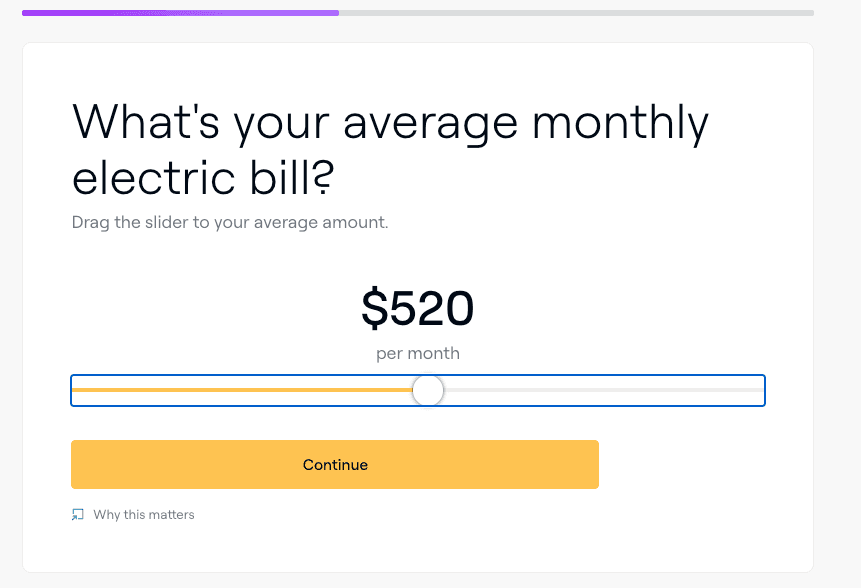
Martha could only find their May bill, which is a little below their average cost, but no problem. Really just looking for a ballpark figure here.
The Washingtons then entered their address, and in a few seconds they had several estimates.
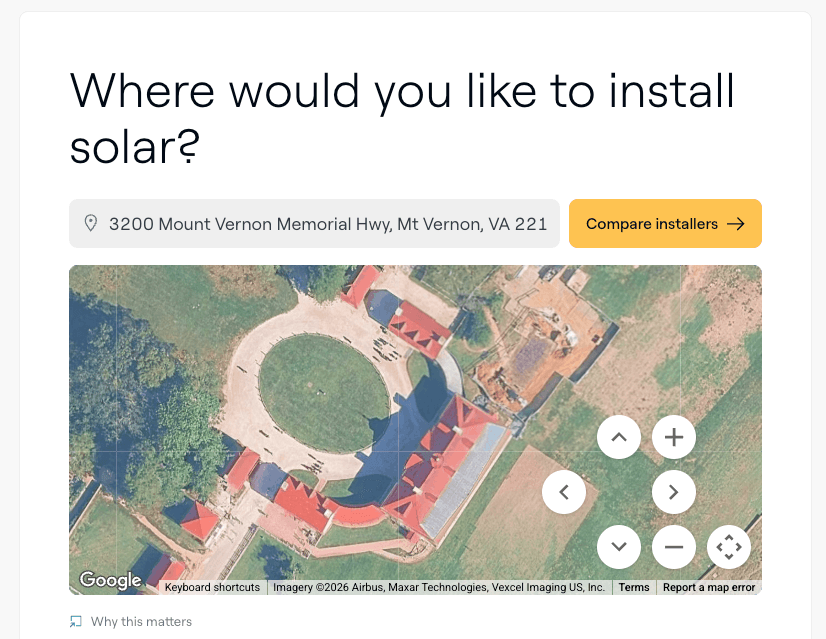
You’ll notice, they didn’t even have to enter their email address, which was good because George was a little embarrassed to give his out unless he absolutely had to (number1prez@hotmail.com).
The solar estimates
It turns out that Mt. Vernon is a great candidate for solar. It has a sunny, Southeast facing roof with very few obstructions, and can support a big system.
Although they’re very wealthy, the Washingtons still thought it made sense to look at all their financing options.
They started with leases, since they heard it was a way to benefit from the remaining tax credits. (The leasing company gets the credit and is able to pass some of the savings on to the consumer.)
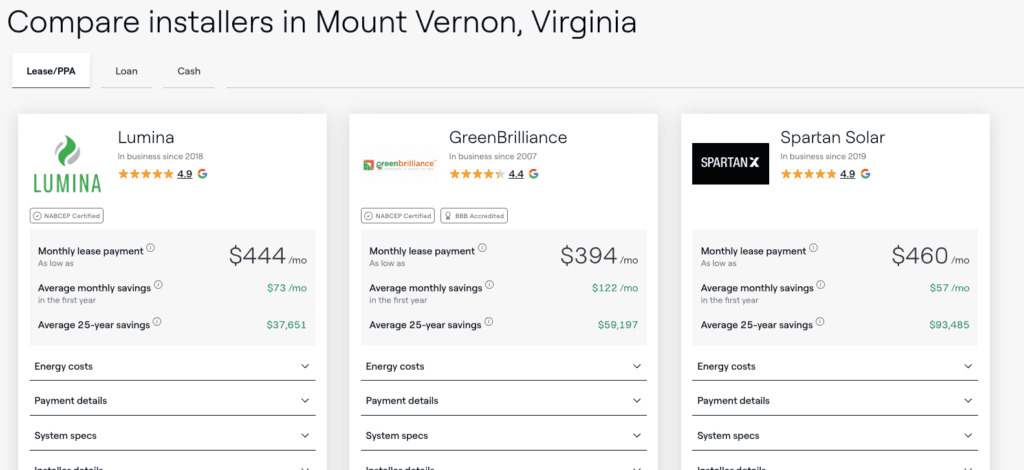
We can see these monthly payments are pretty reasonable, and translate into real savings.
Next they looked at loans.
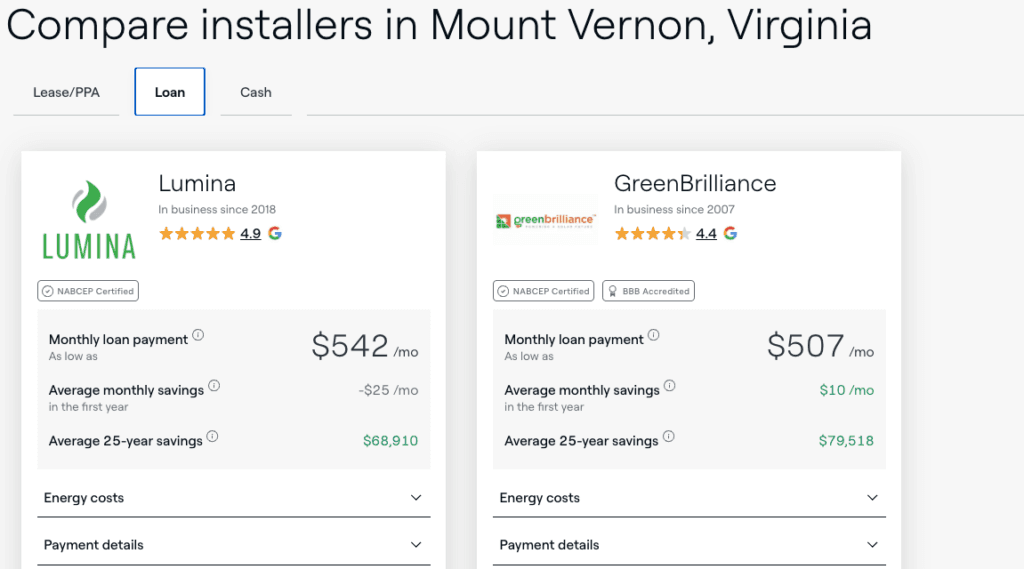
A little more expensive, and doesn’t save them a ton of money from the jump. But remember, this is a huge system and electric bills are constantly rising while these payments stay the same.
Finally they looked at paying cash upfront.
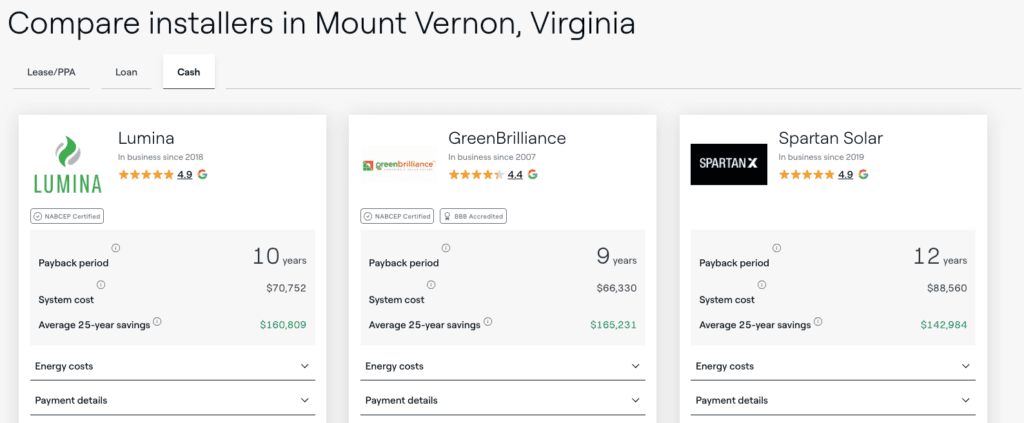
The upfront cost is high (about $70,000 on average), but again, this is a big system. We can see that the payback period ranges from 9-12 years. Seeing as how they built this house for generations to come, ownership seemed like the best option.
It’s important to note that this is an unusually long payback period. The Washingtons are getting a huge system (as we’ll see below). Typical payback times are much shorter.
What would their system look like?
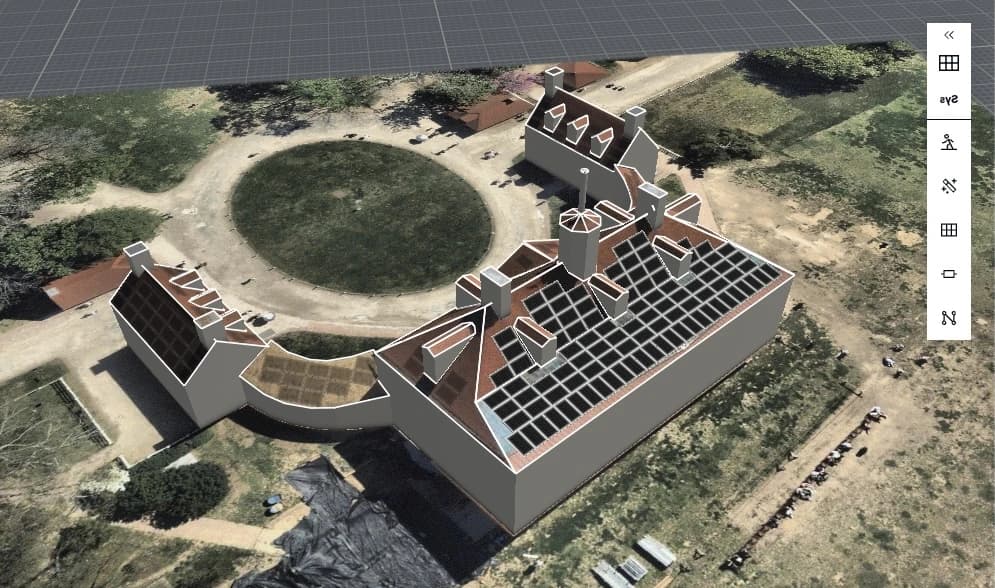
Once they chose the financing option they wanted, they clicked a button and the installer got in touch. The installer gave them more details, like exactly what the system would look like on their roof.
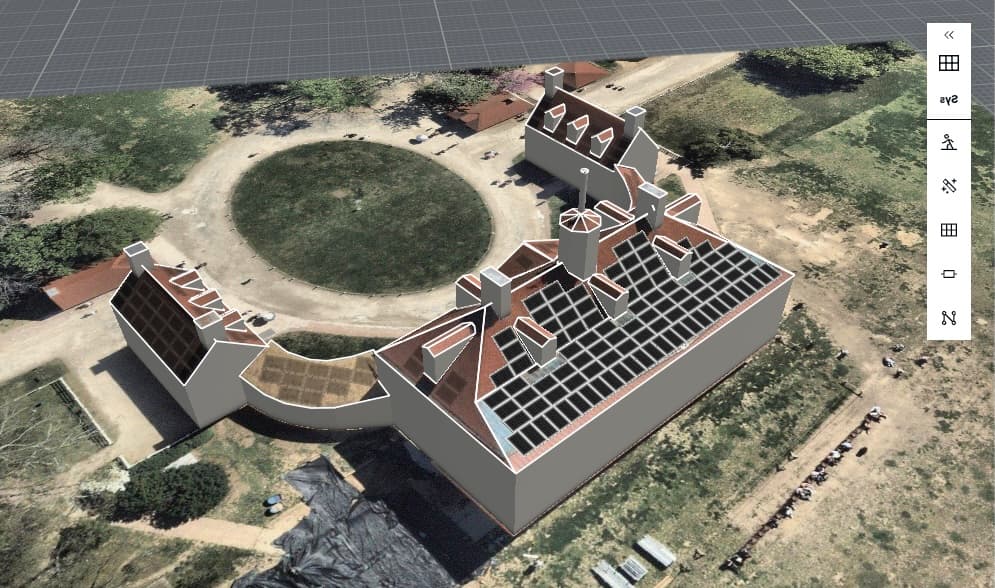
Wow, pretty nice. Now when the Washingtons are sitting out on their porch, looking out at the Potomac, they know that the roof above them is generating clean, free electricity.
See what solar would cost for your house, without entering your email.
Battery add-on?
Being such freedom loving folks, it’s reasonable to think the Washingtons might want to add battery storage to their solar system — for backup and for self-consumption so they could rely even less on the grid.
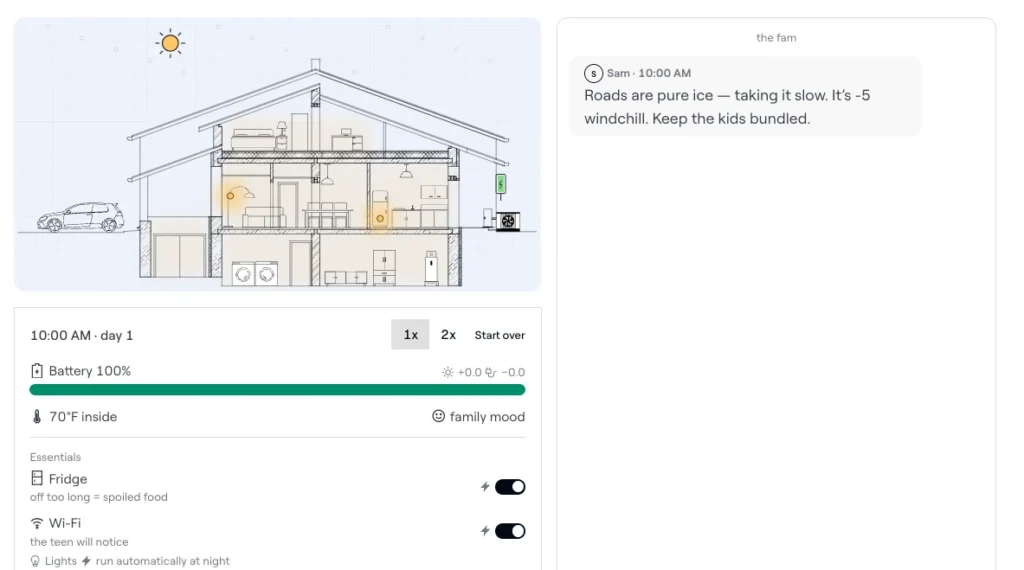
Since they just dropped a cool $70k on solar (again, this is a huge system), they decided to wait. No worries, battery add-ons are becoming increasingly common and many solar installers offer them.
Maybe they’ll do that to celebrate America’s 251st birthday.