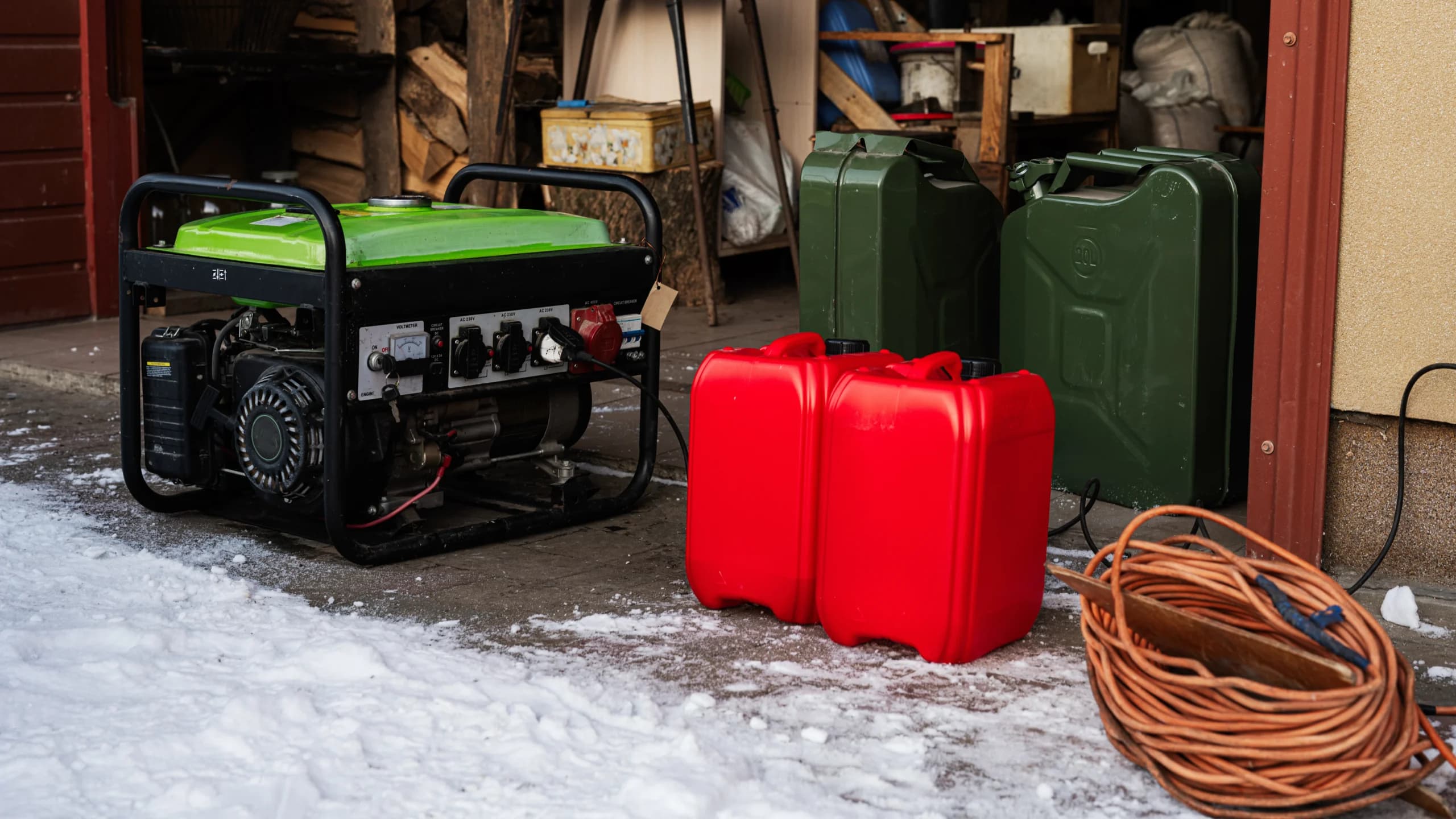
Battery backup vs. generator: Which one earns its keep?
Power outages are lasting longer than ever, up 38% from 2023 to 2024 alone, according to the U.S. Census Bureau. For many homeowners, that means rethinking how to keep your essentials running when the grid goes down.
At the same time, energy costs are spiking. Raise your hand if your electric bill has risen pretty alarmingly over the past few months [raises hand]. Well, what if there was a way to get backup power and potentially save yourself some money on your utility bill?
Well, as you’ve guessed by now, there is. A home battery is one of the few backup options that can earn money — reducing your electric bill, and in many markets, generating direct credits from your utility — even when there’s no outage. On the other hand, a diesel or propane generator can keep the light on during a blackout, but it also costs you money every single day, even when it’s not running.
Let’s take a look at these two home backup options. Both can keep lights, heating, and Wi-Fi online, but they work in very different ways — and their long-term financial profiles are vastly different. This guide breaks down how each system operates, what they actually cost to install and maintain, and how pairing solar with battery storage can create a cleaner, quieter, and more resilient source of backup power.
Backup power options at a glance
If you’re just trying to figure out what “backup power” even means for your house, here’s the short version before we get into the math. Most homeowners are choosing between three real options: a battery backup system, solar-plus-storage, or a fuel generator (gas, propane, or diesel. Each handles an outage differently:
- Battery backup stores grid or solar electricity and releases it silently when the power goes out. No fuel, no fumes, but limited by battery capacity.
- Solar-plus-storage pairs panels with a battery so you’re recharging for free every sunny day, making it the only option that can run indefinitely during a multi-day outage.
- Fuel generators (including whole-house standby generators like Generac) burn gas or propane to produce power on demand, with no capacity ceiling as long as fuel keeps flowing. However, there are ongoing fuel costs, maintenance, and noise.
The right call depends on your outage risk, budget, and how long you need to stay powered. The comparison below breaks down cost, capacity, and maintenance side by side.
How home batteries and generators work
When the power goes out, backup systems help keep electricity flowing in very different ways. Battery systems store electricity from either the grid or solar — “solar-plus-storage” is a term you’ll hear frequently when researching this option. Traditional generators create power on demand by burning natural gas, propane, or diesel. Batteries store power quietly and automatically, while generators create it on demand by burning fuel.
What is a battery backup system?
A home battery system stores electricity from solar panels or directly from the grid. When the grid goes down, your system automatically switches over in just a few seconds, keeping your electricity running.
Inside the battery, a built-in inverter converts stored energy into the alternating current (AC) your home uses. The system cycles between charging and discharging as needed, similar to how your cellphone battery works, but on a much larger scale. Each battery has a usable capacity, which is the portion of stored energy that can actually power your home during an outage. Once backup mode kicks in, you draw from that usable capacity to run your essential items until the grid returns.
Modern batteries operate silently and have no exhaust, so you can install them in a garage without ventilation concerns. When paired with solar, they recharge from the sun during the day and supply a steady source of power during outages whenever you need it. They can even provide energy to your home during times when electricity is expensive, cutting your electric bill significantly.
Battery systems are built to last for 10 years or more and can keep essential appliances running for several hours at a time, depending on the amount of energy you use. A single unit can typically power lighting, refrigeration, internet, mobile charging, and a few small appliances. Homes that have large energy loads, such as central air conditioning or well pumps, may choose to install more battery capacity for longer run times.
What is solar-plus-storage?
Solar-plus-storage refers to a permanent backup solution consisting of solar panels, a hybrid inverter, and a battery engineered to operate together during outages.
It works much like a solar-powered battery backup setup:
- Your solar panels produce electricity during the day.
- An inverter setup routes that energy to your home and charges the battery (and sends extra energy back to the grid).
- When the grid goes down, the inverter automatically isolates your home (also commonly known as islanding) and pulls stored energy from the battery.
- Solar panels can recharge the battery while the system powers essential loads.
Because the battery can recharge from solar during the day, solar-plus-storage can provide multi-day backup — something standalone batteries and fuel generators can potentially have trouble with. These systems operate silently, require no fuel, and continue powering loads as long as sunlight is available to recharge the battery. For homeowners weighing a generator vs solar battery setup, solar-plus-storage typically wins on long-term value, since the battery recharges for free every sunny day instead of relying on purchased fuel.
What is a backup generator?
Backup generators use natural gas, propane, or diesel to create power. Standby models rely on an automatic transfer switch, which senses an outage, disconnects your home from the grid, and sends generator power to your electric panel. Portable generators are a smaller, manual option that you start yourself and connect to selected circuits or appliances — you can think of them like a lawn mower engine that generates electricity instead of spinning mower blades (they’re often just as loud).
Generators can run for long periods as long as they have fuel, although they need regular service to stay reliable. With proper maintenance, a standby unit often lasts 10 to 20 years. Power output varies by size, but residential models can handle larger loads such as air conditioning, sump pumps, or well pumps, while portable units are better suited for basics like lighting, refrigeration, and internet equipment.
See how much you could save with solar + storage. Compare free estimates from top-rated local installers in minutes — no commitment, no pressure.
Get your free estimates → quote.aurorasolar.com
Battery backup vs. generator: main differences
Both systems can keep your home powered when the grid goes down, but they do it in very different ways. Whether you’re comparing a home battery vs generator setup on its own or looking at backup generator battery combinations, the table below highlights the key differences that matter the most for homeowners — how they’re powered, what they cost, and how they fit into everyday home life.
| System | What It Is | Typical Fuel / Power Source | Automatic? | Powers Whole Home? | Best Use Case |
| Home Backup Battery | A permanently installed lithium battery connected to your electrical panel that stores energy for outages | Grid electricity (unless paired with solar) | ✅ Yes | ⚠️ Sometimes (depends on size; most power only essential circuits) | Clean, quiet backup for essentials without installing solar |
| Solar-Plus-Storage (Solar panels + home battery) | A full home energy system pairing rooftop solar with a battery that recharges from sunlight during outages | Solar energy + grid as needed | ✅ Yes | ✅ Yes (when properly sized) | Multi-day outage protection, long-term energy savings, maximum resilience |
| Whole-Home Generator | A permanent combustion generator wired into your home’s panel to create power during outages | Natural gas, propane, or diesel | ✅ Yes | ✅ Yes (designed for whole-home load) | Homes needing long-duration backup without solar or where fuel availability is reliable |
Battery backup vs. generator cost comparison
Whether you’re pricing a standalone battery, solar-plus-storage, or a generator with battery backup add-on, it helps to look beyond the sticker price. Batteries and fuel generators differ not only in upfront costs but also in how much they cost to operate and maintain over time — and only one of them can actually pay you back.
Want to see how a home battery could work for you, with just your ZIP code? Check out our marketplace.
Upfront costs
According to the National Renewable Energy Laboratory’s 2024 Annual Technology Baseline, a typical residential battery system (around 12.5 kWh capacity) costs about $15,000 to $18,000 installed, or roughly $1,200–$1,400 per kWh. Larger systems designed for full-home backup can reach $20,000 or more. Prices vary by brand, chemistry, and installation complexity.
A full solar-plus-storage system — rooftop solar, hybrid inverters, and battery storage — can range from $25,000–$40,000 before incentives, depending on the size of the solar array and storage capacity. However, because these systems generate electricity year-round — not just during outages — they offer both backup power and utility bill savings.
Standby gas generators usually run $3,000 to $10,000 installed, depending on size, brand, and whether you already have a natural gas line. The lower sticker price is real — but it’s just the beginning of what a generator costs you.
The real 10-year cost of a generator
Here’s what most generator comparisons skip: the ongoing expense never stops. Let’s walk through a realistic 10-year cost for a mid-range whole-home diesel generator:
- Upfront purchase and installation: $3,000–$5,000
- Annual maintenance (oil changes, inspections, load tests): $150–$300/year
- Fuel per full-day outage (8–10 gallons of diesel): $35–$60 per outage
- Fuel for monthly test runs: $5–$15/month whether you use it or not
- Transfer switch (if not included): $500–$900
- 10-year total (before major repairs): $7,000–$12,000+
And at the end of those 10 years? The generator has earned you nothing. It hasn’t reduced a single electric bill. It’s a pure cost center — insurance you hope you never use but pay for constantly.
Did you know? According to the U.S. Energy Information Administration, the average American home experiences about 1.5 power outages per year, with an average duration of roughly 4 hours. That means a whole-home generator sits idle for more than 99% of its life.
What a battery earns you
A home battery doesn’t sit dormant between outages — it can do something useful every single day. Here’s what a battery in a solar-plus-storage setup can be doing on a normal, no-outage day:
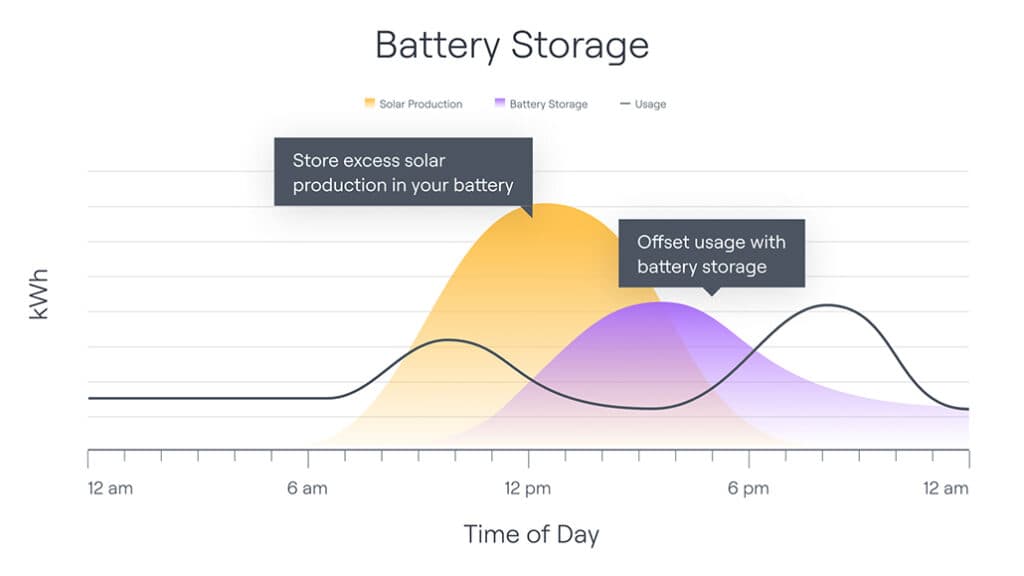
- Stores solar energy generated during peak sunlight hours
- Draws from that stored energy to power your home in the evening, when grid electricity is most expensive
- Minimizes how much power you pull from the grid on time-of-use rate plans
- Can even export energy directly to the grid during peak usage times or when export rates are high
In supported markets — particularly California, Texas, Massachusetts, and parts of the Northeast — utilities now offer virtual power plant (VPP) programs where your battery can earn $50 to $200 or more per year simply by allowing the utility to draw from it briefly during peak demand events. You barely notice. The credit arrives.
The payback math
Here’s a realistic scenario for a homeowner in with a time-of-use rate plan paying $180/month on electricity who adds solar plus a battery:
- Solar system reduces grid purchases by 70%: saves ~$125/month
- Battery shifts remaining consumption to off-peak hours: saves another $15–$25/month
- Demand response program enrollment: earns $10–$15/month in credits
- Total monthly benefit: approximately $150–$165/month
Over 12 months, that’s $1,800–$2,000 in real savings (NOTE: Every household will be different). Over 10 years — accounting for the fact that residential electricity rates have increased an average of 2–3% per year over the last two decades (U.S. Energy Information Administration) — that’s $20,000 to $25,000 in cumulative value. Compare that to the generator’s 10-year cost of $7,000 to $12,000 with zero return.
A solar + storage system also locks in your energy costs today — protecting you from every rate hike that follows.
Don’t take our word for it. Get estimates from installers near you, without giving your contact info.
Incentives and ongoing costs
Incentives
The One Big Beautiful Bill Act (OBBBA) (we didn’t name it) ended the 30% Investment Tax Credit (known as 25D) for solar in 2025. However, there are ways to still get some of that tax credit when you buy a system. You can learn the details in our recent blog, Did the solar tax credit expire in 2026? Here’s what homeowners need to know. Also make sure to check with your installer to understand the latest.
Generators, by contrast, offer no federal tax credit, no state rebates, and no financing structure that results in monthly savings.
Ongoing costs
Batteries have almost no ongoing expenses — they don’t use fuel or have moving parts that wear out. Warranties typically range from 10 to 15 years across major brands, and upkeep is usually limited to software updates and occasional system checks.
The fuel that generators require can add $300 to $800 per year for typical use, depending on local gas or propane prices and how often the system runs. Routine service adds more over time.
Long-term value snapshot
| Category | Home Battery | Solar-Plus-Storage | Generator |
| Installation | $12,000–$20,000 (before incentives) | $25,000–$40,000 (solar + battery) | $3,000–$10,000 |
| Maintenance | Minimal | Minimal | Moderate to high |
| Fuel costs | None | None | $300–$800/year |
| Incentives | 30% federal tax credit + state | 30% federal tax credit + state | Not eligible |
| Lifetime (years) | 10–15 | 15–25 | 10–20 |
| Bills reduced? | Yes | Yes — significantly | No |
| 10-year net value | Positive | $20,000–$25,000+ | -$7,000 to -$12,000 |
Battery cost data sourced from DOE & NREL 2025 residential storage benchmarks.
Home battery vs. generator pros and cons
Both batteries and generators can keep your home powered when the grid goes out, but they fit into daily life in very different ways.
Battery backup: Pros
A home battery provides quiet, clean, automatic backup power. When the grid fails, it switches on within seconds to keep your lights, internet, and fridge running. It doesn’t burn fuel or release fumes, and most systems last a decade or more with minimal upkeep.
If you have solar panels, the battery can recharge from the sun during the day and run your essentials at night. That same setup can also lower electric bills by storing power for use during peak hours — and in many markets, participation in utility demand response programs can generate additional income simply for having the battery connected.
Try your hand at different power outage scenarios with Blackout Battle!
Battery backup: Cons
Batteries cost more upfront than generators, even after tax credits, and their run time depends on their capacity and how much power you use. One unit will usually cover essentials for several hours or a day. Homes in very cold climates may require climate-controlled installation to maintain performance and longevity.
Solar-plus-storage: Pros
A solar-plus-storage system — solar panels + hybrid inverter + battery storage — offers the most sustainable, lowest-maintenance form of backup power.
- Unlimited recharging whenever there’s sunlight
- Silent operation and zero on-site emissions
- Year-round savings, since the system generates and stores your daily electricity
- Highest long-term value, because it replaces grid electricity rather than supplementing it
- Potential income through VPP and demand response programs
Because the battery recharges from your solar panels during the day, solar-plus-storage can sustain multi-day outages more effectively than standalone batteries or fuel generators.
Solar-plus-storage: Cons
- Higher upfront cost, since the system includes both solar panels and battery storage
- Requires roof space and sunlight exposure
- Installation is more complex than a generator
- Backup duration depends on both the size of the solar array and battery capacity
For homeowners with limited roof area — or heavy energy loads like electric heating — solar alone may not fully power the home during long outages without additional battery capacity.
Fuel generators: Pros
Generators are designed for longer outages and heavier power use. They can handle large appliances and keep running as long as there’s fuel. Installation is usually quicker and less complex than a solar-plus-battery setup, and you can choose between natural gas, propane, or diesel.
They are also often the lowest-cost option for homes that need very high surge power or extended whole-home coverage.
Fuel generators: Cons
Generators need regular testing, oil changes, and refueling to stay reliable. Fuel deliveries can be delayed during major storms, and operating costs add up over time. They’re also noisy and produce exhaust, so placement outdoors and away from windows is essential.
Generators do not integrate directly with solar panels or battery systems without specialized equipment, and they cannot be powered or recharged by solar energy. And unlike a battery, they earn nothing during the other 99% of the time.
Finding your ideal backup power solution
The best backup system for your home (whether that ends up being a standalone battery, a generator and battery system working together, or full solar-plus-storage) depends on your habits, your budget, and how your local power grid performs.
1. How often do you lose power?
If you deal with short, occasional outages, a home battery is usually enough to keep things comfortable. It will run your essentials quietly, recharge from solar, and stay ready without any effort.
If your area experiences long or repeated blackouts, a generator might make sense — it can keep large appliances running for as long as you have fuel. A solar-plus-storage system can also handle multi-day outages, since the battery recharges from sunlight during the day. Some homeowners combine a solar battery for everyday reliability and a small generator for rare, extended outages.
If you’re not sure how much electricity your household typically uses, take a moment to understand your home’s true energy needs before sizing a battery or generator.
2. What matters most to you?
If you want quiet, clean energy with little maintenance — and a system that pays you back — a battery or solar-plus-storage system is hard to beat.
If your goal is dependable power at a lower initial cost, a generator might be right for you. It’s less expensive to install and delivers strong surge power for heavy appliances. The trade-off is ongoing fuel and maintenance costs, and zero return on your investment over time.
3. What does your home allow?
Batteries are compact and usually installed in a garage, basement, or utility room. They need a clean, dry location with enough wall space for the unit and safe clearance around the wiring and inverter.
Solar-plus-storage systems require roof space for solar panels and an indoor or garage location for the inverter and battery. Homes with shaded roofs may be better suited to a battery-only or generator solution.
Generators need outdoor space with ventilation and a safe distance from windows or doors. Cold climates may need propane instead of diesel to avoid fuel thickening.
4. Who should install it?
Backup power is only as reliable as the person who sets it up. Look for a licensed installer with experience in the system you want. Ask them to review your electrical panel, estimate your critical loads, and explain how everything works. A good installer will walk you through warranties, service plans, and future expansion options.
Why solar and storage are the future of home power
Reliable backup matters more than ever as outages last longer and happen without much warning. Solar paired with a home battery gives you a complete energy system that keeps working day and night — and keeps paying you back day after day, whether the grid stays up or not.
Solar and storage offer clean, quiet power without fuel, exhaust, or ongoing maintenance. Battery costs are steadily declining, and the National Renewable Energy Laboratory projects a 17–30% drop by 2035. New lithium iron phosphate technology also brings longer service life and added safety.
These improvements are why more homeowners are choosing solar and storage for resilience, long-term savings, and a more sustainable household. A generator keeps the lights on. Solar and storage keep the lights on and put money back in your pocket.
If you’re thinking about backup power options, take a moment to look at your energy habits, outage history, and long-term goals. A qualified local solar installer can help you compare systems, size the right setup, and understand what solar and storage can do for your home.
Frequently asked questions
Q: Can a battery backup system power my entire home during an outage?
It depends on the size of the battery and the amount of electricity your home uses. NREL’s 2024 Annual Technology Baseline lists a representative residential battery with approximately 12.5 kWh of usable storage, which is typically sufficient to run essential circuits for several hours before recharging is required. Households looking for longer runtimes or whole-home backup often install two or more units. If you’re trying to size your system, it helps to know how much backup power your home actually needs.
Q: How long can a generator run continuously?
A standby generator can run for as long as it has fuel and is maintained properly. Natural gas models can operate for several days since they draw fuel directly from the gas line. Propane systems depend on tank size — a standard 100-gallon tank can typically power a 10–20 kW standby generator for 1 to 3 days at half load. Diesel units often have built-in day tanks and can run 12 to 24 hours before refueling.
Q: Do I need solar panels to use a home battery?
No — home batteries can charge from the grid as well as from solar panels. However, pairing a battery with solar is where you get the most financial benefit. Grid-only charging can still help with time-of-use rate optimization, but your savings will be more limited, and you won’t have a truly independent backup source if the grid goes down for an extended period.
Q: What are the main differences between a battery backup and a generator?
Batteries store electricity and run silently with no on-site emissions. They pair naturally with solar, need very little maintenance, and typically last 10 to 15 years. Upfront costs are higher, but operating costs are low because they do not use fuel — and they can actively reduce your electric bill and earn utility credits.
Generators make electricity from natural gas, propane, or diesel. They cost less to install but carry ongoing fuel and maintenance expenses, and they generally last 10 to 20 years with proper care. Generators can deliver higher continuous power and will keep running as long as they have fuel. But they earn nothing between outages.
Q: Is a home battery worth it without solar?
It depends on your utility’s rate structure. If your utility offers time-of-use pricing, a grid-charged battery can save money by storing cheap overnight power and avoiding expensive peak-hour rates. Some homeowners in areas with frequent outages also find the backup value alone worth the investment. Your Aurora installer can run the numbers for your specific situation.
Q: How much does a home battery cost?
Battery costs vary by capacity and brand. A single Tesla Powerwall or Enphase IQ Battery typically adds $10,000–$15,000 to a solar installation before incentives. After the 30% federal tax credit, the effective cost drops to roughly $7,000–$10,500. Many installers bundle solar + battery pricing, and the ITC applies to the full system.
Q: Which option is more environmentally friendly?
A battery is more environmentally friendly — it creates no emissions during use. A fuel-based generator produces CO₂ and other pollutants.
Q: Is a battery backup better than a generator?
For most homeowners, yes. A battery backup runs silently, needs no fuel, and (when paired with solar) can recharge indefinitely during a multi-day outage. A generator wins only if you need unlimited runtime regardless of weather and don’t mind fuel costs, noise, and maintenance.
Q: How much does whole-house battery backup cost compared to a generator?
A whole-house battery backup system typically costs more upfront than a standby generator, but a generator’s 10-year fuel and maintenance costs often close that gap. See the cost comparison above for a size-by-size breakdown.
Q: Can I use a battery backup instead of a generator during a power outage?
Yes, for most homes. A battery backup can run essential circuits (fridge, lights, wifi, medical equipment) for hours to a day or more depending on capacity; solar-plus-storage extends that indefinitely. Only very high-draw, whole-house, multi-day scenarios still favor a generator.
Q: What’s the difference between generator battery backup and a standalone battery system?
Generator battery backup usually refers to pairing a standby generator with a small battery for instant, silent switchover before the generator kicks in. This is useful for bridging the few seconds it takes a generator to start. A standalone battery system, or solar-plus-storage, is designed to be the primary backup source on its own, with no fuel or generator required at all.